
News

Crops_Growing

Time For Weed Control In Potatoes

The prolonged period of cold wet weather over recent weeks had restricted growth of all spring crops sown in late March. Whilst all germinated well, growth of most crops had been particularly slow. Most crops appear to have recovered from the transient yellowing associated with plants struggling to take up nutrients in waterlogged soils this past week.

The problem was very much the lack of heat, restricting nutrient availability and therefore growth and development. The slight rise in temperature this week has encouraged both weeds and crops to move steadily. To date aphids have been discouraged from flying due to cool conditions and aphicides at present may not be required. It is important to remember the work of the beneficial insects on crops.

The well below average air temperatures up until now mean soil temperatures have also been well below average for the time of year. The nitrogen mineralisation process in the soil where fertiliser nitrogen is converted to a form that can be taken up by the crop is a soil microbe process and therefore dependant on soil temperature. Hence colder soil has slowed the availability of nitrogen to the crop, and many other nutrients also, particularly manganese.

The application of a broad-spectrum trace-element mix along with key macronutrients at this time is a very useful and beneficial way to supplement the plant’s nutrient requirements during periods of restricted availability, especially when coinciding with phases of rapid growth ie. during tillering and as stem extension begins. An application of a balanced and readily available source of macro & micronutrients that is not dependant on soil availability at this key time will minimise the adverse effects of restricted soil nutrient uptake. For winter wheat the T2 should ideally be applied between mid-flag leaf to mid-booting, GS38-45 along with the growth regulator. Most winter barley crops are looking exceptionally clean and should  have good yield potential if the weather works in our favour . I think we are well overdue a spell of decent weather, although predicted prices would not excite any of us!

Potatoes

The protracted planting this spring has meant most potato crops have yet to receive weed control. This task must take priority as to delay until after crop emergence will set the crop back even further in an already late season. Conditions have been ideal for the use of residual products (Afalon,Linurex,Sencorex).Where broad –leaved weed control has yet to be completed and the crop has passed the latest timing for Sencorex a reduced rate of Sencorex tank-mixed with Titus will provide a wider weed spectrum of weed control than Titus used alone and can be used on emerged crops up to 25cm high where the label allows .Scutch, other grasses or volunteer cereals are not controlled by the Titus/Sencorex mix. Where these weeds become a problem in coming weeks the graminicide Shogun can be applied. Shogun can cause transient yellowing and is therefore not approved for use on seed crops.

As canopies close, the soil surface will tend to remain damper, encouraging slugs. Timing is critical for effective control, just before the crop meets across the rows. Take advantage of any rainfall by applying pellets just afterwards, as this rain will encourage slugs up onto the soil surface. Potato varieties particularly susceptible to slug damage include Maris Piper ,Desiree and Kerrs Pinks.

Blight fungicides move through the plant in three different ways contact, translaminar and systemic.Dithane,Ranman Top, Shirlan and Tizca are all contact fungicides. These Products protect only the outer surface of the leaf onto which they are deposited.Translaminar products such as Curzate M, Invader, Resplend and Revus move into the leaf and redistribute throughout the leaf tissue as it increases in size whilst systemic products such as Consento and infinito move in through the leaf surface and upwards into the new growth protecting this from infection also. Products that have zoospore activity are the most effective 1st spray, applied at the rosette stage prior to rapid haulm growth. Shirlan or Tizca will control any zoospores that may be in the soil and provide good protection of the new plant. During the main canopy development phase with the considerable amount of new growth it is essential the product being used is fully systemic to properly protect the new leaves being put on between applications. Later planted crops are higher risk as they produce more new growth between applications than earlier drilled crops, at a time when the level of inoculum in the air is progressively increasing. If spraying during periods of unsettled weather, rainfastness of all products will be further improved with the addition of a sticker to the spray solution. Guard is a latex sticker and will improve the retention of the fungicide onto leaf surface, so improving both adhesions onto the leaf immediately post application and over the following days should rainfall levels remain high. The way the blight product is applied is as important as the product choice. Make sure nozzle type used is correct to ensure sprayer pressure; droplet size and water applied is as directed on the label. Inspect and calibrate nozzles regularly to maintain performance. Never use any blight product at reduced rates. Do not spray when the leaves are wet as this will significantly increase the likelihood of runoff


Weather Continues To Make Crops Struggle

The mixed weather and below average temperatures have certainly made things difficult for both arable and grassland farmers recently. We have almost accepted there is no such thing as the norm anymore. It has been very frustrating for farmers trying to grab every available opportunity to spray crop as ground underfoot has become very soft. Conditions however have been ideal for weed control onto potatoes and veg as residual herbicides require moisture to work effectively.

SPRING CEREALS

The above average rainfall over winter has depleted many soils and it is essential to replace essential nutrients. Spring barley crops grown on low PH soils with a low P index seem to be struggling most this season. This must be rectified with lime and Phosphate fertilizer in accordance with soil analysis.

An application of a balanced and rapidly available source of macro & micronutrients at this key time will minimise the adverse effects of restricted soil nutrient uptake. CEREAL HIGH N supplies 3.7%Mn, 1.5%Mg, 1.8%Cu, and 0.6% Zn in the most rapidly available form to the plant through the leaf and also supplies high levels of Nitrogen and Sulphur.Potash deficiency is also showing up in many spring barley crops with pale green yellow tips being the first symptom.Deficency is most likely on light sandy soils or in crops following intensive grassland. Manganese deficiency is also appearing on crops especially those in a continuous cereal regime or where lime has been applied recently. A foliar application may be applied along with the weed control.

To minimise the effects of competition on the crop and optimise the level of weed-control, herbicide application should be carried out at the earliest opportunity, once all the weeds have emerged but are still small, and before they begin to compete with the crop for nutrients and light. With low soil temperatures since drilling, weeds are not coming through as rapidly as expected but chickweed is beginning to choke out young plants and must be sprayed as soon as possible.

Product choice will depend on the weed type and size present and the crop growth stage. Broad leaved wise, Sulfonyl-urea (SU) herbicides will likely be the starting point, controlling a wide range of weeds and very safe to the crop. ALLY MAX covers a wide spectrum of BLW with the max formulation giving improved control of polygonums & other BLW over the old ALLY formulation. HARMONY SX controls a wide range of BLW at sizes larger than any other SU. However they must always be tank-mixed with another BLW herbicide to control SU resistant weeds (chickweed) and those weeds not controlled by the SU’s (cleavers, fumitory& fat-hen). Ideal partners are COMPITOX controlling (chickweed, fat-hen, fumitory), and SPITFIRE /MINSTREL for chickweed and cleavers. HUSSAR may be applied to spring wheat and spring barley to help control annual meadow grass.

Where the range of BLWs present are limited to chickweed, redshank, fat hen, fumitory & day nettle, the hormone mixture products, such as Mircam Ultra, will work well without the need to tank-mix, but must be applied by GS31. Where the likes of field pansy, forget-me-not, speedwells & corn-marigold are also present, sulphonyl-urea products will improve control.  AXIAL gives excellent control of wild and tame oats in spring barley and spring wheat and has an excellent window of opportunity.   Application should be held off until at least 6 weeks after drilling to ensure all wild oats have germinated. It can then be applied up to full flag-leaf of the crop and full flag leaf of the wild oatGS39, allowing a minimum of 21 days to have elapsed after application of the BLW herbicide.  The wetter ADIGOR must be used in all situations along with the AXIAL.

WINTER WHEAT

Most crops are now at flag leaf with Septoria tritici present in most crops at variable levels depending on T1 timing but with recent weather expect levels to rise if fungicide rates and timings are not correct. Mildew is present on almost all winter wheat varieties and a morpholine based product should be applied to clean up the crop. The inclusion of Talius in the program will give very good persistent control of mildew. Of all fungicide treatments, T2 has the greatest impact and response in terms of grain yield and quality, keeping the top three leaves clean and the ear as it emerges. The dose rate applied must be sufficiently robust to ensure long term protection of the flag leaf plus eradicate disease already present on the lower two leaves that also contribute to yield. Epoxiconazole & metconazole in mixture(BRUTUS) will form the key part of the T2 fungicide onto winter wheat.  SDHIs are now regarded as essential partners to maximise the yield of all crops with any reasonable potential, with the most responsive timing for the newest SDHI molecules being at T2. Products such as PEXAN or AYLORA/PROSARO mixtures are ideal for use at the T2 timing. Growth regulator (CERONE)must also be applied at this time where required.


Poor Spring Hampering Growth

The last fortnight has offered very little spray opportunity but every available chance must be taken to ensure correct spray timings. Most winter barley crops are now at flagleaf fully out to awns just visible. Because of the very poor growing conditions this spring, nodes and crop height is not a good indicator alone of the plant growth stage. Growth stages in cereals are hugely influenced by day length. The longer days are driving ear development, and with it ear emergence.

In winter wheat the weakest part of the stem tends to be the lowest internodes and therefore growth regulation at this time maximises strengthening, in barley it is the higher internodes that are weakest. In winter barley the SELON growth regulator applied some weeks ago enhances root anchorage and tiller survival, but has little effect on controlling stem lodging. It is during the later stem extension stages and early flag leaf emergence that the maximum straw strengthening effect will be achieved. When the application is delayed beyond this timing efficacy drops off rapidly, as with each passing day the stem has already added on further length. In any event it is essential the growth regulator is applied before the awns start to appear – a late application as the awns are emerging can damage the emerging ear. The T2 fungicide program should now be planned for winter barley. Properly protecting the top three leaves and ear at T2 is critical to yield and profit – up to 80% of the yield is generated from these leaves. Foliar disease not controlled effectively at this time will hasten the senescence of these leaves during grain filling, and therefore compromise yield and grain quality. Yet there is little point in applying any input if it does not give a financial return. To get the best return on fungicides, applying them at the correct timing is critical.


Spring Cereals

To minimise the effects of competition on the crop and optimise the level of weed control, herbicide application should be carried out once all weeds have emerged but are still small, and before they begin to compete with the crop for nutrients and light. Carrying out the weed control at the 2-4 leaf stage is much more effective especially on difficult weeds such as fumitory and knotgrass, rather than delaying to coincide with the 1st fungicide application.

Broad leaved weeds resistant to certain herbicides in NI is not a new problem – continuous use of straight metsulfuron (ALLY) in previous years has resulted in strains of chickweed that are no longer controlled by this chemistry. Sulfonyl urea (SU) herbicides such as metsulfuron have a single mode of activity, blocking the production in many BLW of a key enzyme, acetolactate synthase. Products that use this mode of activity are known as ALS inhibiting herbicides and include the SU chemistry. ALS resistance is becoming a bigger problem with other weeds now developing this type of resistance, including mayweed and poppy. This development seems inevitable following the continued use of products with the same single mode of action, and more than ever mixtures of products with different modes of activity are essential to maintain good weed control. ALS inhibiting herbicides must therefore always be tank-mixed with another non ALS herbicide to ensure satisfactory weed control, especially of chickweed in NI.

Leatherjackets

Leatherjacket numbers are very high this year with widespread damage seen in recent weeks to new leys and established grass swards particularly in the west of the province. Damage will become evident as spring crops emerge, leaves and whole plants yellowing, cut off just below ground level. Crow activity is also a sure sign of leatherjackets being active. Crops most at risk are those drilled into old ley or dirty stubble, but monitor all emerging crops closely for signs damage. Feeding activity and therefore the likelihood of damage will increase as soils warm up as the leatherjacket continues to feed for some weeks yet before hatching out in late May / early June.

Growth Manipulation

Since tillers are a critical component of yield and tiller numbers decline the later the crop is drilled, it is important that these crops be encouraged to tiller to improve yield potential. Because of the more rapid progression through the growth stages than the winter crop, the growth regulator must be applied very early to maximise the suppression of the main stem development (apical dominance) and therefore divert nutrients and growth to promote tiller development. Optimum timing for barley is from the 2 expanded leaf stage to beginning of tillering, GS12–21; in wheat the optimum timing is slightly later, 5 leaf to mid tillering, GS15-24. SELON is the only chlormequat product approved for use on spring barley. Because an early application suppresses the main stem development and so diverts the growing efforts to the tillers, this extra growing effort also increases root development in the plant, improving crop establishment, stem base lodging (not brackling) and yield. This treatment also gives a consistent straw shortening effect in wheat, but not in barley.

Horticulture

The recent frost has had serious implications on many of our horticultural crops especially the apple and early potato crop.SEAMAXX is a seaweed based fertiliser that can help improve resistance to environmental stress such as extreme temperature, wind damage and drought. It helps the orchard to maintain growth during hostile growing conditions, by reducing stress there is more energy available for flowering and fruit set leading to improved yields. At this critical time MACANNI should be applied as it is safe through the blossom.


Get Tough With Thistles

Thistles come a close second to docks in the list of most troublesome perennial weeds in grassland. The most common thistle species in Ireland are spear thistle and creeping thistle.

Spear thistles are biennial and have sharp, spiny eaves. They only spread by seed that can disperse as far as 30m from the mother plant. Often unnoticed in the first year, in the second they can grow as wide as a dinner plate before flowering. It is vital to stop them seeding in July.

Creeping thistles spread across the ground and once established, the root mass underground is greater than the amount of plant above ground, robbing the grass of moisture and nutrients.

Creeping Thistle roots spread underground[3]

Where thistles grow, grass cannot grow – so in silage crops they take the place of valuable feed. Research shows a 10% infestation of thistles leads to 10% less grass for cutting. Silage containing a high proportion of thistles will also be rejected at the feed trough due to the nasty prickles.

Thistles can also help spread infectious diseases such as orf, a highly contagious viral disease of sheep, causing scabby lesions around the mouth and nostrils of lambs and the teats of lactating ewes.

Topping is wasted effort!

Chopping down thistles with a mower or topper gives instant satisfaction but offers only short-term control. The roots remain largely unaffected and vigorous re-growth soon appears. It is a maintenance operation at very best. Topping also leaves trash on the surface, which can smother any grass trying to grow underneath it.

Eighty per cent of livestock farmers asked in a survey about the level of weed control achieved 12 months after topping, said it had not delivered good enough results to warrant the time, effort and cost of doing it.

Spraying with an appropriate herbicide designed to tackle the specific weeds or situation offers a longer-term solution which, if done correctly will eradicate the problem.

Herbicide choice
There are two main options when choosing a grassland herbicide – contact or systemic/translocated products.

Contact herbicides based on phenoxy carboxylic acid chemistry like MCPA have been around for years, but only work on the areas of the weed they touch. This has a quick effect on the plant above ground – but the active ingredient fails to penetrate inside sufficiently to finish it off.

In reality it is merely chemical topping. Some infestations may need spraying several times with this type of product to achieve the same effect as spraying just once with a more modern translocated one, with all the associated costs of making successive applications.

Modern translocated herbicides such as Thistlex from Dow AgroSciences are regarded as the most reliable solution for controlling perennial weeds in grassland.

The way they work ensures the active ingredients get right inside the plant, travelling around the internal liquid transport system, reaching deep into the roots as well as the stems and leaves.

Safe to grass
An added advantage of Thistlex over MCPA is that it is much more selective – only working on broad-leaved plants and not affecting the grass in any way. In some situations, older products can hold back grass growth. At a time when farmers are seeking to grow and feed as much grass as possible to cut input costs – this is an important consideration when selecting which herbicide to use.

“Thistles need controlling because they compete with grass for space, light, nutrients and water and are unpalatable to stock, so large infestations have to be treated,” explains Dow Agrosciences’ grassland specialist William Corrigan.

“The combination of clopyralid and triclopyr in Thistlex maximises the activity on thistles, giving more than 85% control 12 months after application.


“Apply between 1 March and 31 October and use once per year at a rate of 1l/ha in a water volume of 200l/ha. Use higher water volumes up to 400l/ha, where thistle numbers are high or the grass sward is dense.

“Thistlex can be used on silage and grazing fields. Remove stock during spraying and for seven days after. Where applied to silage land, spray at least three weeks before cutting to allow time for the active ingredients to work fully.

“Spray when the weeds are at the rosette stage and up to 20cm across or high. If they are larger than this, it would be better to top them and spray the active regrowth two to three weeks later.”


Spray Docks In Silage Crops Now

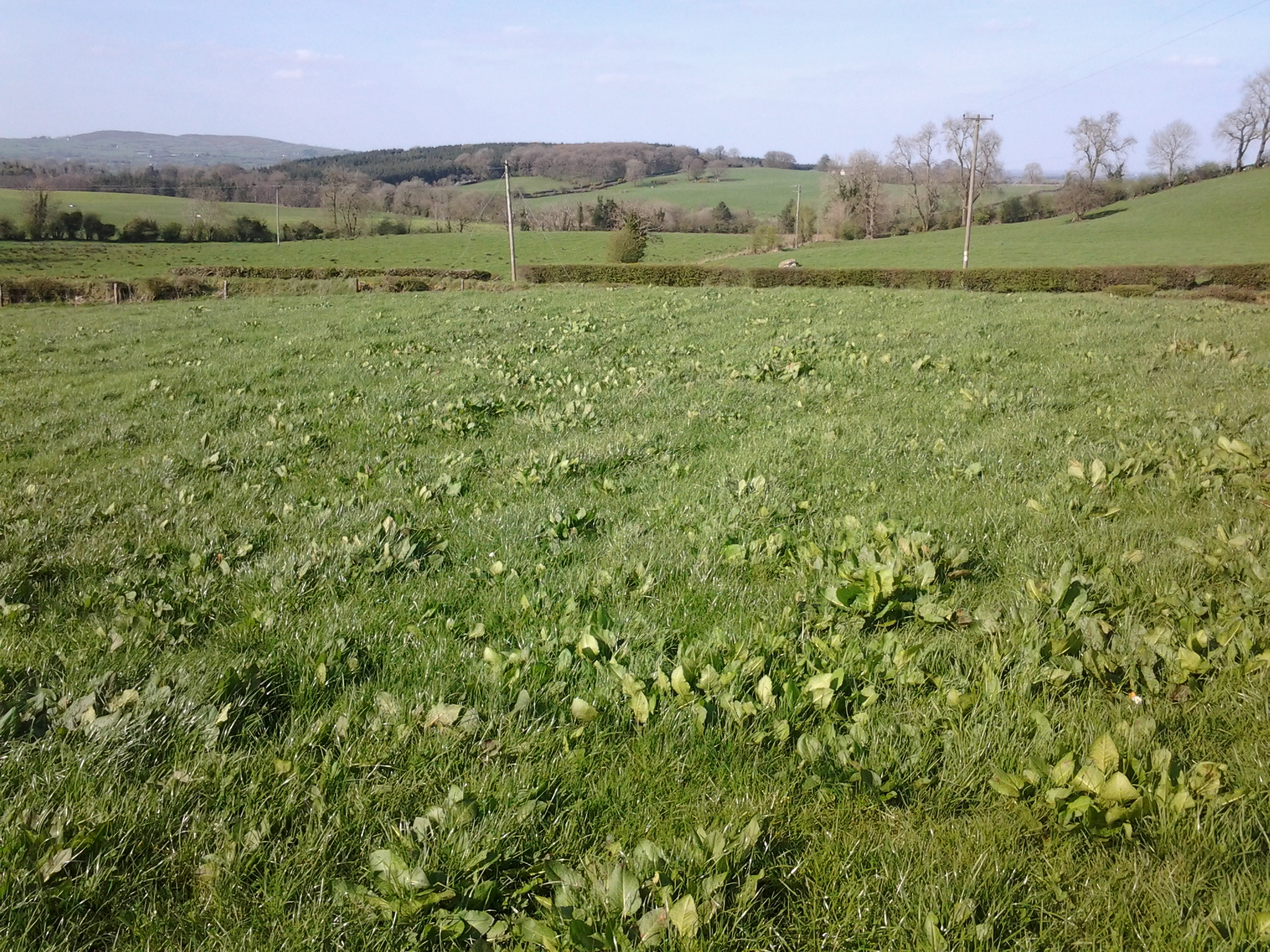
dock photoThe best time to tackle dock infestations in silage crops is before first cut according to William Corrigan, National Business Manager for Dow AgroSciences.

“There are three good reasons for spraying docks in grass in early to mid April,” says Mr. Corrigan.

“Firstly killing them now allows the grass time to spread into the gaps they leave which will maximise silage yields at first and subsequent cuts.

“Secondly it improves the quality of the silage. Docks only have 60% the feed value of grass so the fewer of these that make it into the silage pit the better.

“Thirdly, when using modern translocated herbicides like DoxstarPro, leaving three to four weeks between treatment and harvest gives the active ingredients plenty of time to reach right down into the roots for thorough and long-lasting control.”

Mr. Corrigan suggests farmers plan a potential spray date now by working back at least three weeks from the expected cutting date, and noting this in the diary or booking the contractor if spraying is out-sourced.

“Weed growth has been slow so far this spring due to the cold nights and dull days. But recent warm warmer may spur them into action, especially in fields that have had fertiliser as they respond very well to nitrogen.”

DoxstarPro controls mature and seedling docks – both broad-leaved and curled. For best effect, weeds should be sprayed when they are actively growing and at rosette stage, 15 to 20cm across or high. The dose rate for one spring application is 2l/ha, applied in a water volume of 300l/ha; or 400l/ha if dock numbers are particularly high or the grass sward is dense.


Tackle Buttercups In Grass Before They Flower

The mild winter and kind spring weather means many soils have now reached 5-6°C at 10cm depth. This has triggered both grass and broad-leaved weed growth and the competition for light, space and nutrients is under way.

“As day length increases, every day soil temperatures reach 5oC or more, root and shoot growth starts,” says Andy Bailey, grassland specialist for Dow AgroSciences. “Soil processes also start to kick in as bacteria start to break down organic matter producing nitrogen in plant-available form, which also helps stimulate new growth.

“However, weeds do not start all growing at the same time. Buttercups and dandelions are the first to get going. Bad infestations may need spraying with a translocated herbicide in the next two to three weeks, when rosettes of actively growing, fresh green leaves can be seen,” Mr. Bailey advises.

buttercup just right (800x533)

Waiting until the field is a carpet of yellow in April is too late and spraying then will be less effective. If docks are also a problem, farmers should not be tempted to spray for both at the same time – when the docks are at the ideal stage for treating, buttercups and dandelions will be too far advanced.

“Broad-spectrum herbicides such as Pastor on silage ground and Forefront T on land grazed by cattle and sheep, are good options for early applications to catch both buttercups and dandelions.”

 
Page 24 of 35« First...232425...Last »

Recent Crop Crack

  • Corteva OSR Update – October 2025

    For the latest guidance on oilseed rape crops this autumn, read the Corteva OSR update by clicking here. Topics covered include: Oilseed rape crop status and growth Weed control and…

  • Potato Weed Control & Buttercup Control In Grass

    The good spring continues, with little excuse for all fieldwork not being up to date. Ground conditions continue to be excellent, with silage being cut in ideal conditions, maize…

  • Dry Weather Puts Pressure On Spring Crops

    Spring Cereals The extended period of dry weather has allowed farmers to make significant progress on field work. For many growers it has been the earliest end to a…

Recent News